
 EN
EN
 ar
ar bg
bg hr
hr cs
cs da
da nl
nl fi
fi fr
fr de
de el
el hi
hi it
it ko
ko no
no pl
pl pt
pt ro
ro ru
ru es
es sv
sv tl
tl iw
iw id
id lv
lv lt
lt sr
sr sk
sk sl
sl uk
uk vi
vi et
et hu
hu th
th tr
tr fa
fa ms
ms hy
hy ka
ka ur
ur bn
bn mn
mn ta
ta kk
kk uz
uz ku
ku
weir flow meter
A Kingmach weir flow meter installation works as a hydraulic measurement point, not simply a sensor mounted near water. The weir body, crest, approach channel, water head location, enclosure, cable route, and inspection access all affect the quality of the flow record. A good site has stable approach flow and enough access for cleaning, verification, and safe maintenance. If the water surface is turbulent, if sediment collects near the crest, or if downstream water backs up toward the measuring section, the record may not represent the intended relationship between head and flow. Product information can help project teams evaluate these conditions before installation. It also reminds owners that long-term reliability comes from both equipment and routine channel care. A well-installed point can provide useful data for years, while a poorly placed point can create repeated uncertainty even when the electronics are working. Maintenance teams need a record that tells them where to look. If a curve drops slowly, cleaning and sediment checks may come first. If it rises suddenly during dry conditions, upstream operation or a changed drainage path may deserve attention. The strongest flow reports are written around decisions. They show whether to keep observing, clean the channel, inspect upstream conditions, check downstream backwater, or compare the point with another water-level or rainfall record.
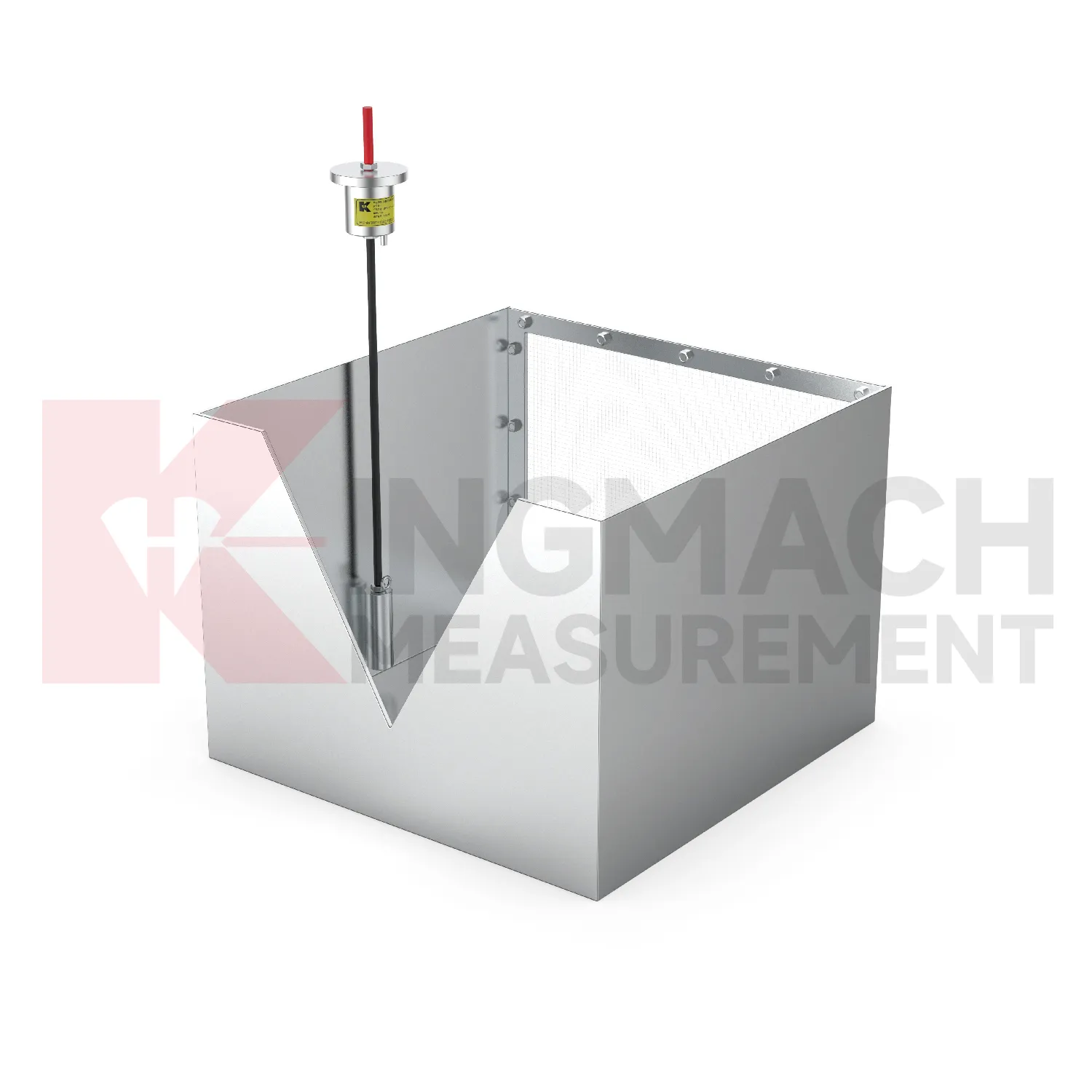
Application of weir flow meter
Tunnel and underground projects use Kingmach weir flow meter when discharge, seepage collection, or drainage flow needs to be observed over time. A tunnel drainage point may behave differently after rainfall, excavation, lining work, groundwater change, or maintenance cleaning. Flow records should be reviewed with seepage notes, water level observations, settlement, convergence, crack records, and inspection photographs. The measuring point must remain accessible because underground channels can collect sediment, scale, or debris. Point names should include section, side, drainage path, and purpose so future maintenance teams know what the record represents. A reliable flow curve helps distinguish routine drainage from a change that may require closer investigation. In underground work, the context around the number matters. A rising flow trend near a known seepage zone may require a different response from a brief rise after planned washing or pumping. Operators should keep notes about access restrictions, lighting, ventilation, cleaning time, and visible deposits near the measuring section. Those details help engineers review the record without guessing what happened on site. When the tunnel enters long-term service, the same monitoring point can continue to support drainage maintenance, seasonal review, and early discussion of unusual water movement. It also helps compare different tunnel sections without relying only on memory or scattered inspection notes.
The future of weir flow meter
The future of Kingmach weir flow meter will place more attention on readable reporting. Flow monitoring often serves mixed audiences: hydraulic engineers, maintenance teams, water managers, construction supervisors, and asset owners. A useful report should explain the measured channel, the time period, the event, the flow trend, the site condition, and the action taken. It should not require every reader to interpret raw curves. Clear reporting will make flow data easier to use during storm review, irrigation planning, tunnel maintenance, drainage management, and long-term asset reporting. Future reports should separate observation from judgment. The chart may show a rise or drop, while the note explains rainfall, pumping, cleaning, blockage, or downstream influence. When those layers are visible, different teams can discuss the same event without losing the field context. Readable reporting saves time because it makes the next action easier to agree on. It also makes monthly review easier for non-specialist managers.
Care & Maintenance of weir flow meter
Seasonal maintenance should be planned for Kingmach weir flow meter. In wet seasons, debris and sediment may increase. In dry seasons, algae, scale, or low-flow conditions may affect the control section. In cold areas, freezing or ice can distort the water path. In construction areas, temporary works may change runoff and sediment. A seasonal checklist should be tied to the actual site, not copied from a generic calendar. The best maintenance schedule reflects weather, land use, upstream activity, and the owner?s need for reliable flow records during critical periods. Before the high-risk season begins, teams can inspect access, labels, crest condition, outlet clearance, and data communication. After the season, they can review which alarms were useful, which visits were unnecessary, and which channel conditions caused uncertainty. That review turns maintenance history into a better plan for the next operating period. It also supports cleaner budgeting for field labor and spare parts.
Kingmach weir flow meter
For water conservancy and drainage work, Kingmach weir flow meter helps turn routine channel observation into a record that can be compared over time. Manual checks may capture a single moment, but automatic flow monitoring can show daily rhythm, storm response, operating changes, and abnormal behavior. The data is useful when it answers practical questions: Is the channel passing expected flow? Did a maintenance action restore capacity? Did a rainfall event create delayed discharge? Did sediment or debris affect the measurement? A strong flow monitoring plan connects the weir point with field inspection and maintenance notes so the number remains explainable. The value is not only in collecting a level reading. It is in creating a stable reference for how a channel behaves under normal use, heavy rain, seasonal change, and maintenance activity. When the same location is observed consistently, operators can see whether the site is changing gradually or reacting to a specific event.
FAQ
Q: What site conditions affect flow readings?
A: Sediment, debris, turbulence, backwater, algae, damaged crest edges, poor approach flow, and changed channel geometry can all affect the record.
Q: Why is cleaning important?
A: Cleaning keeps the control section clear so the water head record continues to represent the intended flow relationship.
Q: How should abnormal flow changes be reviewed?
A: Check rainfall, upstream operation, downstream condition, cleaning history, enclosure status, and field inspection notes before drawing conclusions.
Q: Can flow monitoring be remote?
A: Yes. Remote monitoring is useful when continuous records are needed or when the site is difficult to access during storms or operation.
Q: What should be recorded at installation?
A: Record channel location, flow direction, weir condition, water head reference, cable route, enclosure position, cleaning access, and first stable reading. The strongest flow reports are written around decisions. They show whether to keep observing, clean the channel, inspect upstream conditions, check downstream backwater, or compare the point with another water-level or rainfall record.
Reviews
Christopher Martinez
Very satisfied with the readouts & data loggers. User-friendly interface and supports multiple sensor inputs.
David Wilson
We purchased displacement transducers and settlement sensors, and the quality exceeded our expectations. Easy installation and reliable performance.
Latest Inquiries
To protect the privacy of our buyers, only public service email domains like Gmail, Yahoo, and MSN will be displayed. Additionally, only a limited portion of the inquiry content will be shown.
Mia***@gmail.comNetherlands
Dear team, we are interested in your readouts & data loggers compatible with multiple sensors. Do yo...
Amelia***@gmail.comSingapore
Hello, I am looking for visualization software for monitoring system data analysis. Please let me kn...
Related product categories
- Intelligent Weir Flow Meter
- Smart Weir Flow Meter
- weir flow meter
- weir type flow meter
- weir flow meter Price
- weir flow meter Manufacturer
- weir flow meter Supplier
- weir flow meter Solution
- weir flow meter System Integration
- weir flow meter Localization
- weir flow meter Domestic Manufacturing
- weir flow meter China