
 EN
EN
 ar
ar bg
bg hr
hr cs
cs da
da nl
nl fi
fi fr
fr de
de el
el hi
hi it
it ko
ko no
no pl
pl pt
pt ro
ro ru
ru es
es sv
sv tl
tl iw
iw id
id lv
lv lt
lt sr
sr sk
sk sl
sl uk
uk vi
vi et
et hu
hu th
th tr
tr fa
fa ms
ms hy
hy ka
ka ur
ur bn
bn mn
mn ta
ta kk
kk uz
uz ku
ku
4G DTU
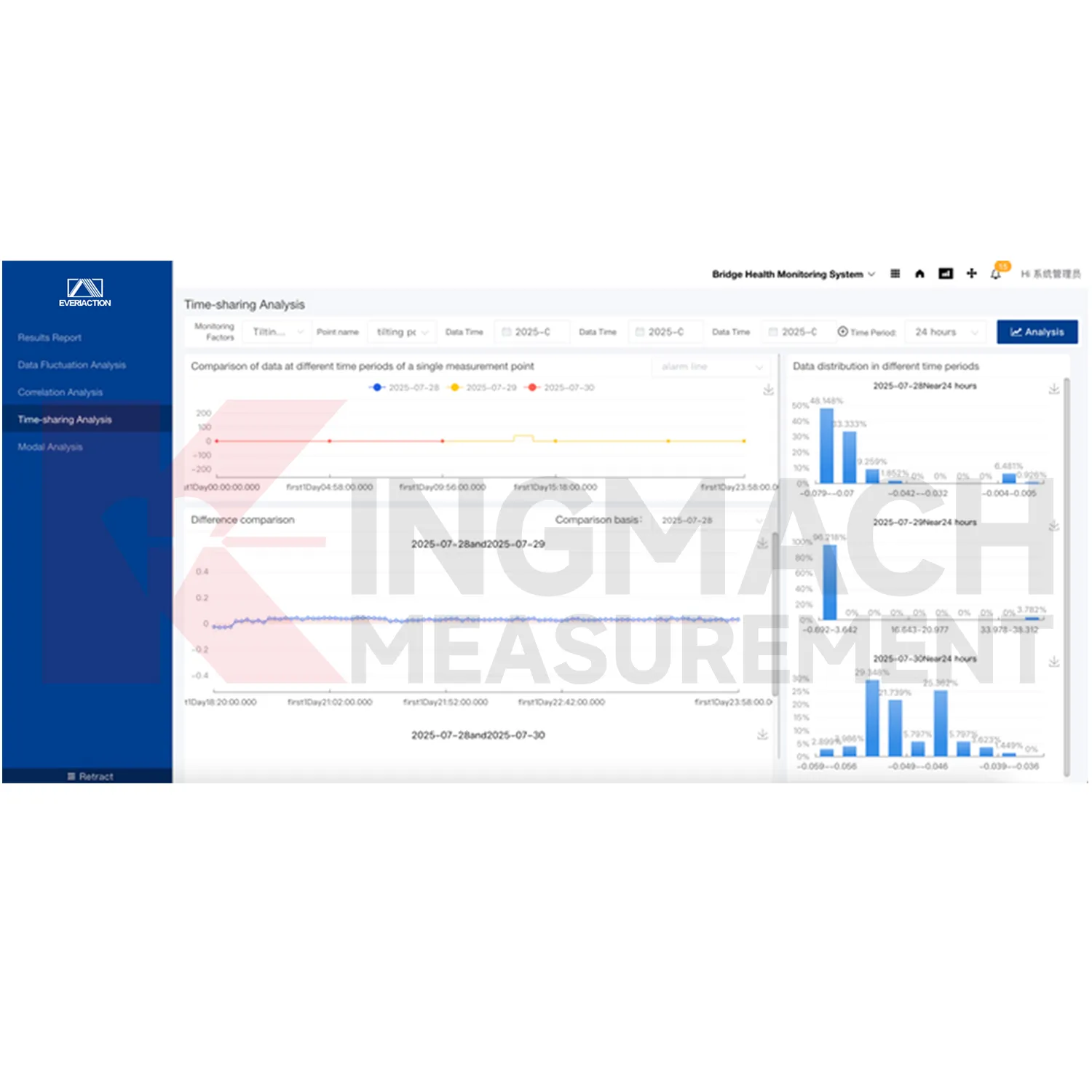
The Monitoring system software platform can build structural safety models and support intelligent detection and health analysis. The local product file describes the use of formulas, algorithms, and manual research and judgment methods to determine the location and extent of structural damage. This makes the platform useful when monitoring data must support engineering interpretation instead of simple storage. The software can warn of changes in structural performance and help reviewers connect abnormal readings with a specific asset area, sensor group, or inspection record.
Application of 4G DTU
Building monitoring uses Kingmach 4G DTU when settlement, tilt, crack displacement, vibration, temperature, or foundation pit influence must be reviewed over time. Urban projects often involve nearby construction, traffic, equipment vibration, and changing occupancy conditions. The platform helps organize sensor readings and alarms by project, making it easier to compare today's behavior with baseline records. Graphical display is useful for owners and engineers who need to understand whether movement is stable, event-related, or growing.
The future of 4G DTU
Cloud computing will support wider remote use of Kingmach 4G DTU. Owners and engineering teams may need to review assets from offices, field sites, control centers, or mobile workstations. Cloud-based access helps keep monitoring visible even when the structure is difficult to reach. Remote review will not replace field verification, but it can improve timing. Teams can identify which area needs inspection, what related data should be checked, and which documents should be prepared before arriving on site.
Care & Maintenance of 4G DTU
Data quality checks should be routine in Kingmach 4G DTU. Look for missing values, frozen channels, impossible jumps, timestamp errors, unit mismatch, repeated noise, or disagreement between related sensors. A platform can display data quickly, but engineering trust depends on the quality of the incoming records. When a problem appears, check the field device, cable, communication path, acquisition module, and recent configuration changes before treating the reading as structural behavior.
Kingmach 4G DTU
The core value of Kingmach 4G DTU is not only display. It supports fast storage, real-time filtering, efficient analysis, complex statistics, user-friendly display, and personalized customization of collected data. These functions help convert raw sensor streams into information that can be reviewed by engineers and maintenance teams. A single abnormal point may need trend comparison, related channel review, inspection notes, and alarm history before action is taken. The platform gives those elements a common place, reducing the risk that important context is lost across separate files or devices.
FAQ
Q: How are trend curves used?
A: They help compare current readings with earlier behavior so gradual movement, sudden jumps, or event response can be reviewed.
Q: What does real-time filtering help with?
A: It reduces noisy or distracting records before users study the channel history.
Q: How do alarms guide action?
A: Configured rules point users toward the affected point, severity level, time, and related follow-up record.
Q: What makes reports easier?
A: Stored trends, alarms, project files, and expert review notes can be gathered without rebuilding the evidence manually.
Q: Why is graphical display useful?
A: Graphs help users see movement direction, timing, and abnormal patterns faster than raw tables alone.
Reviews
Daniel Brown
Excellent environmental monitoring sensors. The data is consistent, and the system integrates smoothly with our existing setup.
Robert Taylor
The weir flow meter is well-built and delivers accurate measurements. Great value for water management applications.
Latest Inquiries
To protect the privacy of our buyers, only public service email domains like Gmail, Yahoo, and MSN will be displayed. Additionally, only a limited portion of the inquiry content will be shown.
Charlotte***@gmail.comUnited Arab Emirates
Hi, we require instrumentation cables suitable for harsh environments. Could you advise on specifica...
Isabella***@gmail.comGermany
Hello, we are evaluating weir flow meters for a water management project. Please share accuracy deta...